AI Search, Explained Simply (And Why It Matters to You)
If you've used Google recently, you might have noticed something new. Before the usual list of blue links, Google now often shows a written answer at the very top of the page - generated by artificial intelligence. Ask "what's the best way to unblock a drain" and instead of just links, you get a full explanation, written for you, instantly.
That feature is called an AI Overview, and it's powered by Google's AI system, Gemini. It's part of a much bigger shift that's quietly changing how people find businesses online - and if you run a business, it affects you whether you realise it or not.
The good news? You don't need to be technical to understand this. This guide explains, in plain English, what's happening, why it matters, and what you should actually do about it. If you'd rather just talk it through with a human, you can book a free strategy call any time.
What Is AI Search?
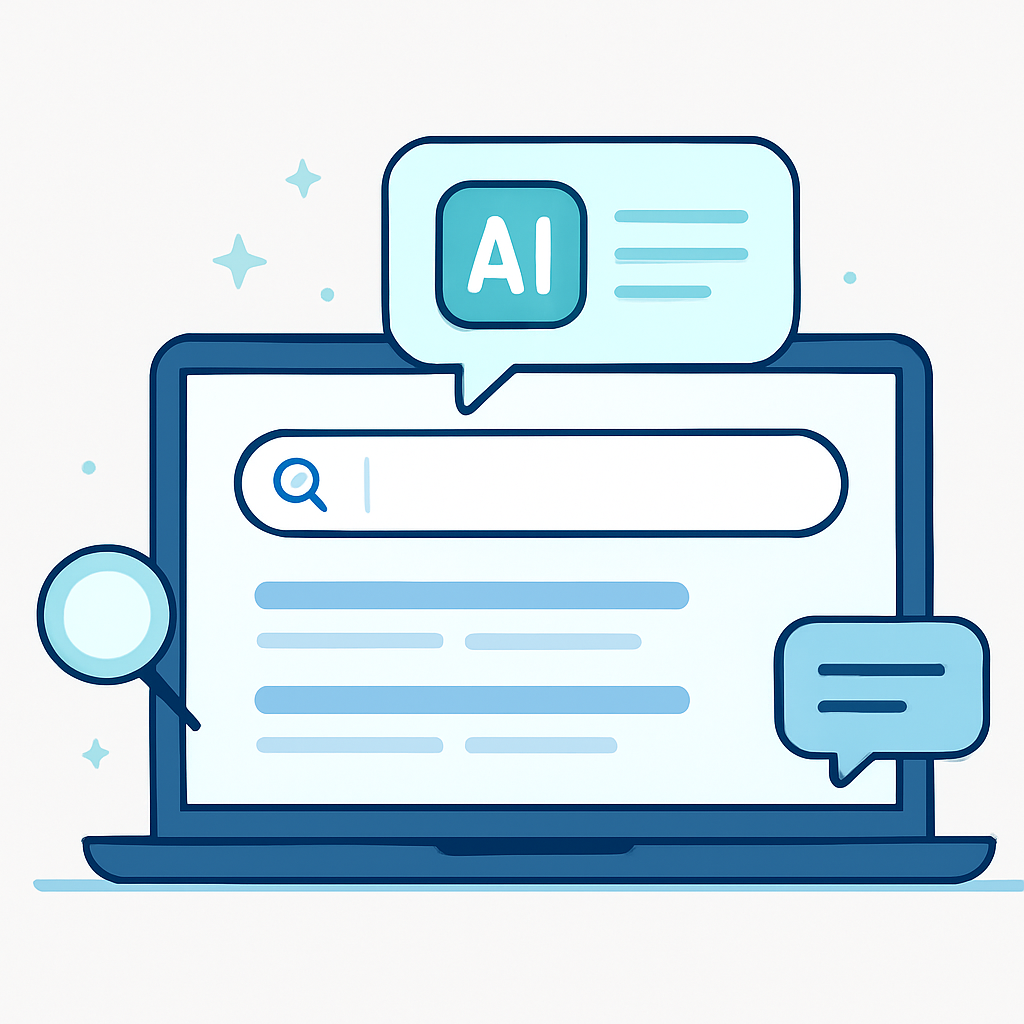
AI search is when a search engine answers your question directly using artificial intelligence, instead of only giving you a list of websites to click.
For the last 20 years, Google worked roughly like this: you typed in some words (your "search"), and Google showed you a list of links it thought were relevant. You clicked one, landed on a website, and found your answer there.
AI search changes that. Now, Google's AI reads through lots of websites for you, then writes a summary answer right there on the results page. You often get what you need without clicking anything at all.
The big players in AI search include:
The common thread: people increasingly want a direct answer, not a list of links to dig through themselves.
Why People Want Answers, Not Keywords
Think about how search used to work. You'd compress your real question into a few clumsy keywords. Instead of asking "why is my boiler making a banging noise when the heating comes on," you'd type "boiler banging noise" and hope for the best.
We all learned to "speak Google." But AI has flipped that. Now you can ask a full, natural question - exactly how you'd ask a friend or an expert - and get a proper answer back.
This matters for two reasons:
For businesses, this is a fundamental change. It's no longer enough to "rank for keywords." You now need to be the trusted source the AI chooses to quote when it answers your customer's question.
What Are Google's AI Overviews?
AI Overviews are AI-generated summaries that appear at the very top of Google's search results, above the traditional paid ads and organic links.
Here's why that placement is such a big deal. The top of the search page is the most valuable space on the internet. For years, that space was split between:
Now there's a new resident sitting above both of them: the AI answer. When Gemini generates an Overview, your customer reads that first - and sometimes never scrolls down to the ads or organic links at all.
In short: Google's AI now often comes before paid results. That single change is reshaping how businesses get found.
How Will AI Search Impact My Business?
This is the question that actually matters. Let's break the impact down into plain, practical terms - both the risks and the opportunities.
1. Fewer "Free" Clicks From Google
When the AI answers a question directly, some people get what they need and don't click through to any website. This is often called a "zero-click search." If your business relied heavily on free organic traffic from simple informational searches, you may see some of that traffic shrink.
2. Being Quoted by AI Becomes the New "Ranking #1"
The flip side: when the AI writes its answer, it pulls information from trusted websites - and often names or links to them. Being one of those cited sources is the new holy grail. It puts your brand in front of the customer at the exact moment they're looking, and positions you as the expert.
3. High-Intent Searches Still Convert - and Ads Still Work
Here's the reassuring part. AI Overviews mostly affect informational searches ("how does X work"). When someone has their wallet out - searching "emergency plumber near me" or "buy running shoes size 10" - they still want to take action, click, call, and buy. These high-intent, commercial searches are exactly where Google Ads remain incredibly effective. AI hasn't removed the need to advertise; it's changed where each type of search fits.
4. Trust and Brand Matter More Than Ever
AI systems favour sources that are credible, well-structured, and genuinely helpful. Businesses with a strong reputation, clear information, and real expertise will be favoured. Thin, salesy, low-quality websites will be ignored by the AI - just as they're increasingly ignored by people.
Will AI Replace Google Ads?
No - but it is changing how and where paid ads work. Google makes the vast majority of its money from ads, so it has every incentive to keep advertising effective even as AI search grows. In fact, Google is already placing ads inside and around AI Overviews.
What's actually happening is a split:
So the smart move isn't to panic and abandon paid ads. It's to make sure your ad budget is focused on the high-intent, money-making searches where buyers are ready to act. That's exactly the kind of focus a well-managed account delivers - and a good place to start is checking whether your current PPC is doing its job.
What Is Answer Engine Optimisation (AEO)?
You've probably heard of SEO (Search Engine Optimisation) - the practice of getting your website to rank in Google. There's now a newer cousin: AEO (Answer Engine Optimisation), sometimes called GEO (Generative Engine Optimisation).
Answer Engine Optimisation is the practice of structuring your content so AI systems like Gemini choose to use and cite your business when answering questions.
The principles are refreshingly common-sense:
If that sounds a lot like "just be genuinely helpful and trustworthy" - that's because it largely is. AI is rewarding the same qualities good customers have always valued.
How to Prepare Your Business for AI Search
You don't need to overhaul everything overnight. Here are practical, beginner-friendly steps to future-proof your business.
Frequently Asked Questions About AI Search
Is AI search going to kill SEO?
No. SEO is evolving, not dying. The fundamentals - helpful content, a fast trustworthy website, and genuine authority - are exactly what AI search rewards. The tactics change, but the goal of being a trusted, visible source stays the same.
Should I stop spending on Google Ads?
Definitely not. High-intent commercial searches still drive clicks, calls, and sales, and ads remain one of the fastest, most measurable ways to win customers. The key is focusing spend on searches where people are ready to buy.
How do I get my business mentioned in AI Overviews?
Create clear, genuinely helpful content that answers your customers' real questions, back it up with a trustworthy brand and good reviews, and structure your pages so they're easy to read. There's no "pay to appear" button - it's earned through helpfulness and credibility.
Does this affect small businesses or just big ones?
It affects everyone - but small businesses can actually win here. AI rewards genuine expertise and helpfulness over sheer size or budget, so a focused local business that truly knows its field can absolutely earn its place.
The Bottom Line
AI search isn't a distant trend - it's already changing how your customers find businesses today. Google's Gemini and AI Overviews now answer questions before showing paid or organic results, people increasingly want direct answers rather than lists of links, and trust and expertise matter more than ever.
But this isn't a threat to fear - it's an opportunity for businesses willing to adapt. The winners will be those who genuinely help their customers, build real trust, and keep their paid advertising focused on the searches that actually drive revenue.
If all of this feels like a lot to keep on top of, you don't have to do it alone. Book a free strategy call and we'll explain - in plain English, no jargon - exactly how AI search affects your business and where your best opportunities are. Or start with a free PPC audit to make sure your paid advertising is ready for the way people search now.