Why Your Old Playbook Stopped Working
If your Meta results have become less predictable over the past year, you're not alone. A lot of what used to work, like carefully layered interest audiences and ten near-identical ads per ad set, now works less well. The reason is a change in how Meta picks which ads to show.
What Andromeda Actually Is
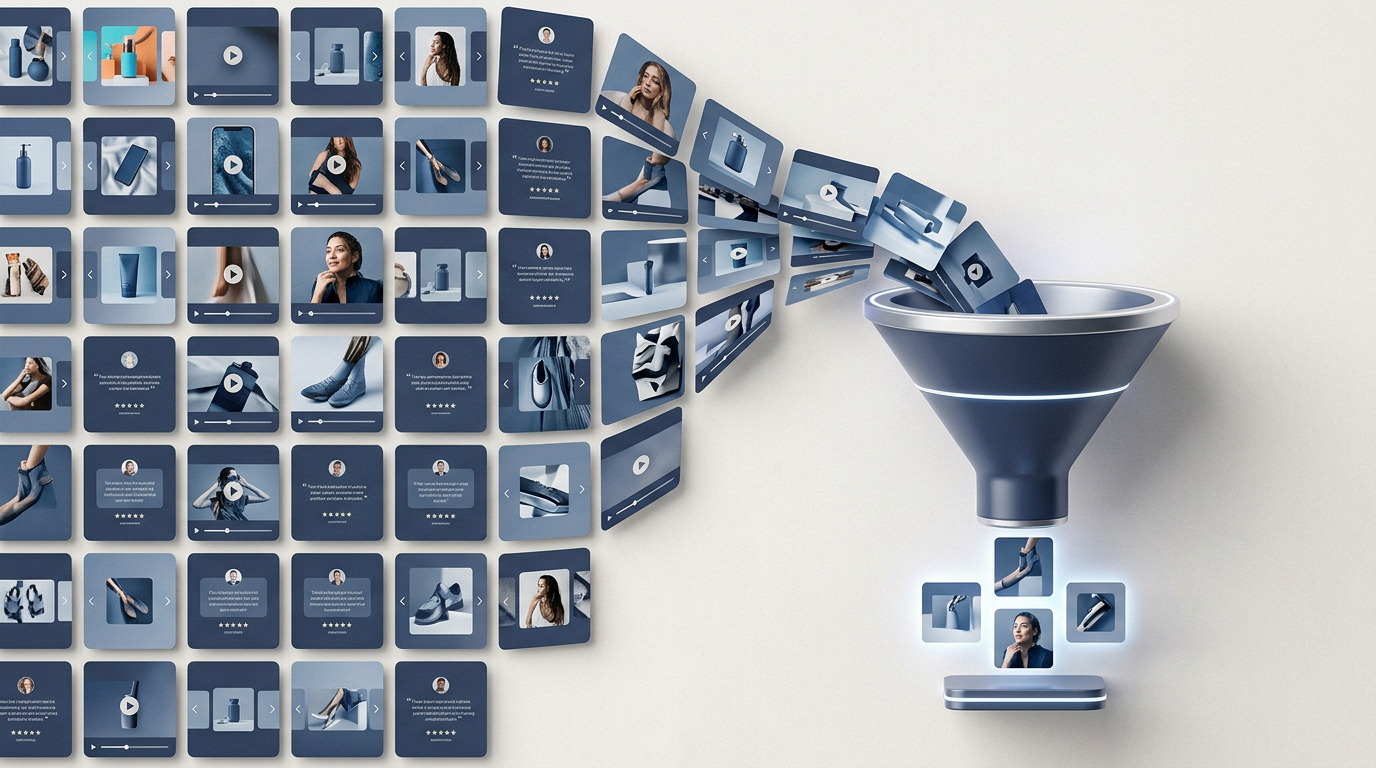
Every time someone opens Facebook or Instagram, there are millions of ads that could in theory be shown. Meta can't run a full auction on all of them, so it first narrows them down to a shortlist. That narrowing step is called retrieval, and Andromeda is the system that does it.
Andromeda matches what Meta knows about a person's interests and behaviour with what it understands about each ad: the visuals, the words, the format and the offer. Only ads that make the shortlist go into the auction. There's no setting for it. It's simply how delivery now works.
The practical consequence is simple: if your creative doesn't clearly signal who it's for, it won't get shortlisted for the right people.
Why Creative Became the Targeting
Under the old model, you told Meta who to target and then showed them an ad. Now Meta increasingly looks at the ad to decide who to target.
A few real examples of how that plays out:
Same business, same budget, very different audiences, decided by the creative.
The Mistake Most Accounts Make
When people hear "Meta wants more creative variety", they make ten versions of the same ad with different headlines or background colours. To Andromeda, those are basically the same ad. They compete for the same people and the account doesn't learn anything new.
Real diversity means changing something meaningful:
How We Plan Creative Now
Start with angles, not ads
Before anyone opens an editor, we list the reasons people buy from you and the objections that stop them. Each one becomes a creative angle. A typical service business ends up with six to ten.
Make fewer, more different ads
We'd rather test four genuinely different concepts than twenty variations of one. Each concept gets a fair share of budget and at least a week to show what it can do.
Judge on the right numbers
Early on we look at hook rate (the share of people who watch past three seconds), hold rate and click-through rate. Then we look at the number that pays the bills: cost per qualified lead or ROAS.
Keep the pipeline going
Winning ads fatigue. We plan a small batch of new concepts every two to four weeks so there's always something ready to replace the ad that's slowing down.
What About Audiences?
Audiences still matter, just differently. Customer lists, website visitors and your conversion data are still very valuable signals. What matters less is narrow interest stacking. For most of our accounts, broad targeting with strong creative and good tracking now beats tight interest audiences.
This is also why Meta is comfortable removing placement controls. The platform is betting on signals over settings.
Where To Start
If you only change one thing, audit your live ads and group them by concept rather than by ad. If you've got 15 ads and only two genuine ideas, you know what to do next.
Want help building a creative plan that works with Andromeda rather than against it? Take a look at our Meta ads management service.